


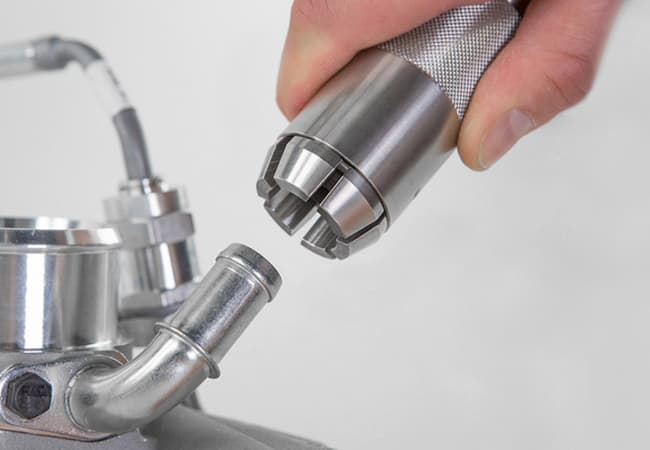

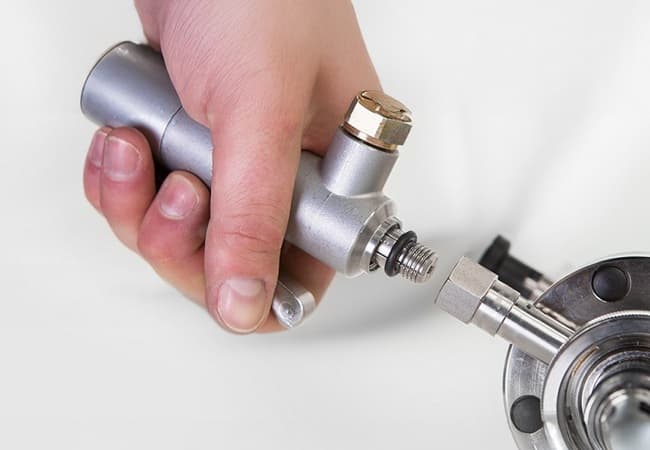





Why use quick connectors for testing?
Whether pressure testing, leak testing or functional testing – every second counts in test environments. Screw connections cause downtime, wear and increase the risk of leaks or inaccurate results.
The solution: WEH® Quick Connectors
- Connection in seconds
- No tedious hand tightening
- Reduced connection times
- Time and cost savings
- Enhanced productivity
- Protection of operators’ joints

Quick connect without hand-tightening
Simple, tool-free handling – ideal for high test frequencies & series testing.

Repeatable & reliable
Consistent test conditions without assembly errors – for reliable test results.

Automation possible
Numerous WEH® quick connectors are available for automated testing processes – with optional media return.

Pressure-tight connection
Reliable sealing even at high pressures – for precise test results and maximum process reliability.

Robust quality – Made in Germany
Quality materials, low-wear design & 100% final testing for lasting reliability on the test bench.
The right quick connector for every testing application.









Operating Pressure:
Vacuum up to max. 350 bar
Actuations:
H = manual actuation via hand lever
V = pneumatic actuation via valve button
P = pneumatic actuation for external manual, semi or fully
automatic control systems

Operating Pressure:
Vacuum up to max. 350 bar
Actuation:
Manual actuation via clamping lever

Operating Pressure:
5 - 12 bar compressed air
Actuation:
Manual actuation via sliding sleeve

Operating Pressure:
Vacuum up to max. 345 bar
Actuation:
Hand-tightening

Operating Pressure:
Max. 350 bar
Pilot pressure:
6 - 8 bar
Actuation:
Pneumatic actuation via valve button

Operating Pressure:
Vacuum up to max. 9 bar
Pilot pressure:
Body size 01: 6 - 9 bar compressed air
Body size 1 - 8: 6 - 12 bar compressed air
Actuation:
Pneumatic actuation

Operating Pressure:
Max. 50 bar
Pilot pressure:
6 - 12 bar compressed air
Actuation:
Pneumatic actuation

Operating Pressure:
Max. 450 bar
Pilot pressure:
6 - 8 bar air
Actuation:
Pneumatic actuation via valve button

Operating Pressure:
Vacuum up to max. 35 bar
Pilot pressure:
6 - 12 bar compressed air
Actuation:
Pneumatic actuation

Operating Pressure:
Vacuum up to max. 50 bar
Actuation:
Hand-tightening

Operating Pressure:
Vacuum up to max. 350 bar
Actuations:
H = manual actuation via hand lever
V = pneumatic actuation via valve button
P = pneumatic actuation for external manual, semi or fully
automatic control systems
Operating Pressure:
Max. 350 bar
Pilot pressure:
6 - 8 bar
Actuation:
Pneumatic actuation via valve button

Operating Pressure:
Vacuum up to max. 50 bar
Actuation:
Manual actuation via sliding sleeve

Operating Pressure:
Vacuum up to max. 630 bar
Actuation:
Manual actuation via sliding sleeve
Operating Pressure:
Vacuum up to max. 9 bar
Pilot pressure:
Body size 01: 6 - 9 bar compressed air
Body size 1 - 8: 6 - 12 bar compressed air
Actuation:
Pneumatic actuation
Operating Pressure:
Vacuum up to max. 35 bar
Pilot pressure:
6 - 12 bar compressed air
Actuation:
Pneumatic actuation

Operating Pressure:
Max. 3 bar
Actuation:
Manual actuation via clamping lever

Operating Pressure:
Vacuum up to max. 70 bar
Actuation:
Manual actuation via clamping lever

Operating Pressure:
Vacuum up to max. 70 bar
Actuation:
Manual actuation via clamping lever

Operating Pressure:
Vakuum bis max. 100 bar
Actuation:
Manual actuation via hand lever
Operating Pressure:
Max. 3 bar
Actuation:
Manual actuation via clamping lever
Operating Pressure:
Vacuum up to max. 70 bar
Actuation:
Manual actuation via clamping lever
Operating Pressure:
Vacuum up to max. 9 bar
Pilot pressure:
Body size 01: 6 - 9 bar compressed air
Body size 1 - 8: 6 - 12 bar compressed air
Actuation:
Pneumatic actuation
Operating Pressure:
Vacuum up to max. 9 bar
Pilot pressure:
Body size 01: 6 - 9 bar compressed air
Body size 1 - 8: 6 - 12 bar compressed air
Actuation:
Pneumatic actuation
Operating Pressure:
Vacuum up to max. 35 bar
Pilot pressure:
6 - 12 bar compressed air
Actuation:
Pneumatic actuation
Operating Pressure:
Vacuum up to max. 350 bar
Actuations:
H = manual actuation via hand lever
V = pneumatic actuation via valve button
P = pneumatic actuation for external manual, semi or fully
automatic control systems
Operating Pressure:
Max. 350 bar
Pilot pressure:
6 - 8 bar
Actuation:
Pneumatic actuation via valve button
Operating Pressure:
Max. 3 bar
Actuation:
Manual actuation via clamping lever
Operating Pressure:
Vacuum up to max. 70 bar
Actuation:
Manual actuation via clamping lever
Operating Pressure:
Vacuum up to max. 50 bar
Actuation:
Manual actuation via sliding sleeve
Operating Pressure:
Vacuum up to max. 630 bar
Actuation:
Manual actuation via sliding sleeve
Operating Pressure:
Vacuum up to max. 9 bar
Pilot pressure:
Body size 01: 6 - 9 bar compressed air
Body size 1 - 8: 6 - 12 bar compressed air
Actuation:
Pneumatic actuation
Operating Pressure:
Vacuum up to max. 35 bar
Pilot pressure:
6 - 12 bar compressed air
Actuation:
Pneumatic actuation
Operating Pressure:
Vacuum up to max. 350 bar
Actuations:
H = manual actuation via hand lever
V = pneumatic actuation via valve button
P = pneumatic actuation for external manual, semi or fully
automatic control systems
Operating Pressure:
Max. 350 bar
Pilot pressure:
6 - 8 bar
Actuation:
Pneumatic actuation via valve button
Operating Pressure:
Vacuum up to max. 50 bar
Actuation:
Manual actuation via sliding sleeve
Operating Pressure:
Vacuum up to max. 630 bar
Actuation:
Manual actuation via sliding sleeve
Operating Pressure:
Vacuum up to max. 9 bar
Pilot pressure:
Body size 01: 6 - 9 bar compressed air
Body size 1 - 8: 6 - 12 bar compressed air
Actuation:
Pneumatic actuation
Operating Pressure:
Vacuum up to max. 35 bar
Pilot pressure:
6 - 12 bar compressed air
Actuation:
Pneumatic actuation
Operating Pressure:
Vacuum up to max. 350 bar
Actuations:
H = manual actuation via hand lever
V = pneumatic actuation via valve button
P = pneumatic actuation for external manual, semi or fully
automatic control systems
Operating Pressure:
Max. 350 bar
Pilot pressure:
6 - 8 bar
Actuation:
Pneumatic actuation via valve button
Operating Pressure:
Max. 3 bar
Actuation:
Manual actuation via clamping lever
Operating Pressure:
Vacuum up to max. 70 bar
Actuation:
Manual actuation via clamping lever
Operating Pressure:
Vacuum up to max. 50 bar
Actuation:
Manual actuation via sliding sleeve
Operating Pressure:
Vacuum up to max. 630 bar
Actuation:
Manual actuation via sliding sleeve
Operating Pressure:
Vacuum up to max. 9 bar
Pilot pressure:
Body size 01: 6 - 9 bar compressed air
Body size 1 - 8: 6 - 12 bar compressed air
Actuation:
Pneumatic actuation
Operating Pressure:
Vacuum up to max. 35 bar
Pilot pressure:
6 - 12 bar compressed air
Actuation:
Pneumatic actuation
Operating Pressure:
Vacuum up to max. 350 bar
Actuations:
H = manual actuation via hand lever
V = pneumatic actuation via valve button
P = pneumatic actuation for external manual, semi or fully
automatic control systems
Operating Pressure:
Max. 350 bar
Pilot pressure:
6 - 8 bar
Actuation:
Pneumatic actuation via valve button
Operating Pressure:
Max. 3 bar
Actuation:
Manual actuation via clamping lever
Operating Pressure:
Vacuum up to max. 70 bar
Actuation:
Manual actuation via clamping lever
Operating Pressure:
Vacuum up to max. 50 bar
Actuation:
Manual actuation via sliding sleeve
Operating Pressure:
Vacuum up to max. 630 bar
Actuation:
Manual actuation via sliding sleeve

Manual actuation
With sliding sleeve
Pneumatic actuation
For external manual, semi or fully automatic control systems
Pneumatic actuation
Via valve button
Manual actuation
Via hand lever
Manual actuation
Via Clamping lever
As individual as your process: different types of actuation.
Whether manually via lever or sliding sleeve – or automated via pneumatic actuation: Our quick connectors are available in numerous actuation variants and can be flexibly integrated into existing testing processes.

Standard product or custom solution?
Whether small installation spaces, special sealing concepts or high cycle rates – WEH develops customized solutions for special testing requirements. Together with you – precisely tailored to your application.
Typical Applications

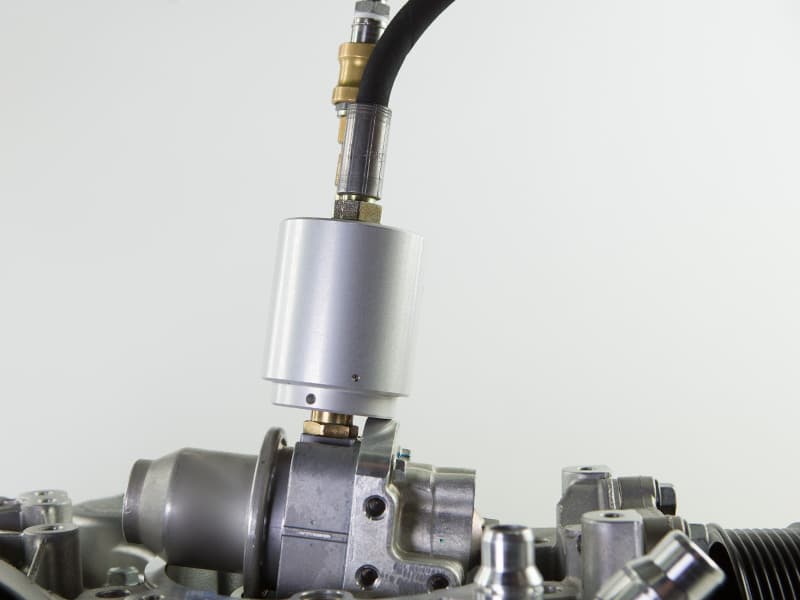
Pressure and leak testing

Function test

Discover & Download
Downloads
Catalogs
Get a quick overview of the entire range of WEH products - clear, compact and as a PDF for download.
Operating Instructions
All information on the safe commissioning and use of our products - including safety instructions and step-by-step instructions.
Certificates
Our products are tested and certified according to international standards. Here you will find all relevant quality and conformity certificates.
Why WEH?

Quality You Can Rely On
Our products are manufactured to the highest standards. At WEH, quality is no coincidence – it’s our standard, ensured by 100% final inspection and certified processes.

Service You Can Rely On
By choosing a WEH® product, you’ve chosen long-lasting quality. And our service ensures it stays that way. Whether maintenance, inspection, repair, or original spare parts – our experienced team is committed to maximum safety, efficiency, and preserving the value of your equipment.

Fast and Helpful Support
Questions about application, technology, or spare parts? Our technical support team is here for you – direct, competent, and without detours. Personally available and globally reliable.